10 Tips for Primary Election Day Voters
- Primary elections determine party nominees for general election. Unaffiliated voters can choose a party primary or nonpartisan ballot.
- Bring a valid photo ID to vote in person. Absentee voters must return ballots by 7:30 pm on Election Day.
- Polling places are open 6:30 am to 7:30 pm. Voters in line by 7:30 pm can still vote.
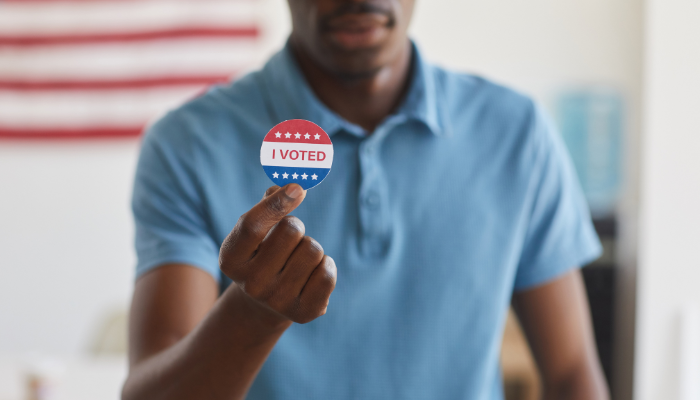
Primary Election Day is Tuesday, March 3, the final opportunity for registered voters to cast a ballot in this election. If you plan to vote on Election Day, please see the following tips:
- Know the rules for a primary election. Primary elections are used to determine each political party’s nominees to advance to the general election in November. This year, the Democratic and Republican parties are holding primaries. Voters registered with either of these parties will receive their party’s primary ballot. An unaffiliated voter may choose to participate in one of these party primaries, or select a nonpartisan ballot, if available in their jurisdiction. Because their parties do not have primaries, registered Green Party or Libertarian Party voters may only vote a nonpartisan ballot, if available in their jurisdiction. Nonpartisan ballots would be available in any jurisdiction that has a referendum or a nonpartisan election. In even-year primary elections, this typically involves school board elections.
- Find your sample ballot. Use the State Board’s Voter Search tool to locate your sample ballot. The sample ballot shows the contests that you’ll be voting on. Using Voter Search, pull up your voter record, then scroll down to the “Your Sample Ballot” section. Unaffiliated voters will see multiple ballot styles and get to choose one when they check in to vote.
- Go to your assigned polling place on Election Day. Statewide, more than 2,600 polling places will be open from 6:30 a.m. to 7:30 p.m. on Tuesday. Voters in line at 7:30 p.m. will be able to cast a ballot. To find your polling place, use the Voter Search tool.
- Bring your photo ID. You will be asked to show photo ID at your polling place when you check in to vote. Most voters will simply show their driver’s license, but there are many other acceptable photo IDs. For more information, including the full list of acceptable IDs, visit BringItNC.gov. Voters who do not have photo ID when they vote can meet the photo ID requirement by either (1) showing their ID at their county board of elections office by noon on Friday, March 6, or (2) filling out a form explaining why they are unable to show ID.
- If you still plan to vote an absentee ballot, act fast. The deadline for your county board of elections to receive your ballot is 7:30 p.m. on Tuesday, March 3. If you are unsure that the postal service or another delivery service will deliver your ballot by Tuesday, you can instead drop it off at your county board of elections during business hours, or at an early voting site in your county through 3 p.m. Saturday, February 28, when early voting ends. Or you can discard your absentee ballot and vote in person on Election Day instead.
- Provisional voting. If you show up to vote and your name is not on the voter list, you may request a provisional ballot. About 10 days after an election, voters who cast a provisional ballot can check the status of their ballot with the Provisional Search tool. Read more about Provisional Voting.
- Voters may not register on Election Day in North Carolina. While that is the general rule, voters who become eligible after the regular voter registration deadline, either due to becoming a U.S. citizen or having their rights restored following a felony conviction, are still permitted to register and vote on Election Day.
- If you need assistance, request it at your polling place. Curbside voting is available for voters who are unable to enter the voting place without assistance due to age or disability. Once inside the polling place, voters who experience difficulties should request help from an election worker. For more information, see Help for Voters with Disabilities.
- Peace at the polls. All voters, campaigners, and candidates should respect the rights of others to participate in the election. Election officials are trained to quickly address incidents that might interfere with a voter’s ability to cast their ballot. Intimidating any voter is a crime. Voters who feel harassed or intimidated should notify an election official immediately. It is also a crime to interfere with election officials carrying out their duties.
- Election results will be posted on the State Board’s website. See the Election Results Dashboard. See also the Election Night Reporting Timeline for information on when the public can expect unofficial results on election night.
For more information about voting on Election Day, see Vote in Person on Election Day.

10 Tips for Primary Election Day Voters was originally published on foxync.com