Project Exposes Racial Disparity In NC Traffic Stops
Source: Pamela Moore / Getty
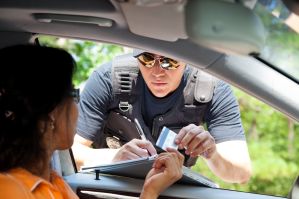
A new project by a Durham-based nonprofit allows users to explore the racial disparities of traffic stops by law enforcement across the state, stops that disproportionately affect minority drivers. The Southern Coalition for Social Justice launched the website Open Data Policing NC, using more than 10 years of law enforcement data reported to the North Carolina Department of Justice.
The site allows users to explore traffic stops broken down by race and ethnicity, as well as other statistics including use of force and discovery of contraband. Although the data have been available online through the DOJ’s website, the interface makes analysis difficult for most users.
Not every agency is represented in the database, since departments are required to report only if they serve populations greater than 10,000 people. Ian Mance, a staff attorney for the Southern Coalition who led the creation of the new site, said “This is not a snapshot of enforcement activity – this is a portrait of enforcement activity. By and large, this site captures all traffic stops that have occurred during the time period in the state.”
In the Triangle, the statistics show minorities are overrepresented in the traffic stop data relative to their population.
- Black drivers made up 45 percent of the Raleigh Police Department’s traffic stops since 2002, even though census data shows blacks make up 29 percent of the city population. Whites make up 58 percent of the population but were stopped 52 percent of the time.
- In Durham, black drivers made up 58 percent of the stops since 2002. Of the drivers searched by police in traffic stops, three out of four were black. Blacks make up 41 percent of the population in Durham, according to the census.
- Since 2002, black drivers made up 24 percent of the Chapel Hill Police Department’s stops, despite the fact that blacks make up just 10 percent of the population there. Black drivers also made up 41 percent of searches.
The site does not provide data showing how often drivers were cited after stops, but it does compare how much more or less likely minority drivers are to be stopped for several different types of violations, from impaired driving to speeding. In a 2012 report by political scientists Frank Baumgartner and Derek Epp, an analysis of more than 13 million traffic stops from 2000 to 2011 showed black and Hispanic drivers were subject to search at “consistently higher” rates than whites.
The researchers also found minorities were more likely to be arrested for the same type of infraction that would earn white drivers a warning. Mance said this kind of analysis has prompted policy changes in places such as Durham, where city leaders re-examined their policies on traffic stops and searches in an attempt to tackle racial disparities.
In Fayetteville, where blacks make up 42 percent of the population, data shows black drivers made up 57 percent of traffic stops since 2002 and 71 percent of searches conducted during those stops. Mance said that, although the site is online and available now, his team plans to improve it with feedback from the public and law enforcement leaders.
They’re also planning to launch new features where they can, such as location data for traffic stops from agencies willing to provide it. Now that it’s launched, he said the organization will update the site with new data monthly so users can continue to track trends over time.
Mance also said “This is really about informing the public and being transparent about what’s happening on our streets and highways.”
For more information click here
Text “LIGHT” To 37890 for your chance at ticket giveaways and news before anyone else!…Standard Messaging Rates Apply