New Orleans Could Be Next To Remove Confederate Symbols
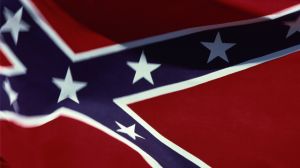
Source: Thinkstock
New Orleans could make a sweeping break with its Confederate past as city leaders decide whether to remove prominent monuments from some of its busiest streets. With support from Mayor Mitch Landrieu, a majority on the City Council appears ready to take down four monuments.
However their ordinance has sparked passionate responses for and against these symbols, and before Thursday’s vote both sides will get one more say at a special council meeting. According to a mapping project geographers have identified at least 872 parks, natural features, schools, streets and other locations named for major Confederate leaders in 44 states.
Charles Kelly Barrow, commander-in-chief of the Sons of Confederate Veterans said over a thousand statues and monuments and countless plaques also honor Confederate battles and heroes. Barrow also said he and others will sue if necessary to keep the monuments where they are.
Landrieu first proposed taking down these monuments after police said a white supremacist killed nine parishioners inside the African-American Emanuel AME Church in Charleston, South Carolina in June. In New Orleans, the mayor asked the council to take a closer look at monuments that have long been part of the city’s landscape.
The most imposing, a 16-foot-tall bronze statue of Lee has had a commanding position over St. Charles Avenue since 1884, standing atop a 60-foot-high Doric marble column. Four sets of stone staircases, aligned with the major compass points, ascend the mound.
The Virginian stands in his military uniform, with his arms folded and his gaze set firmly on the North, the embodiment of the “Cult of the Lost Cause” southerners invoked to justify continued white power after the Civil War. Also up for removal is a bronze figure of the Confederate president that now stands at Canal Street and Jefferson Davis Parkway, and a more local hero, Pierre Gustave Toutant Beauregard, who straddles a prancing horse at the entrance to City Park.
The most controversial is an 1891 obelisk honoring the Crescent City White League and an inscription added in 1932 said the Yankees withdrew federal troops and “recognized white supremacy in the South” after the group challenged Louisiana’s biracial government after the Civil War. In 1993, these words were covered by a granite slab with a new inscription, saying the obelisk honors “Americans on both sides” who died and that the conflict “should teach us lessons for the future.”
The city has estimated it will cost $144,000 to remove the monuments, and says an anonymous donor will pay that cost. Derek Alderman, a geographer at the University of Tennessee who is mapping Confederate symbolism nationwide said popular culture is trying to establish how to rewrite “American and Southern public memory in a way that makes room for both perspectives on heritage, and at the same time is fair and just to African-American perspectives that historically have not been recognized.”
Rather than removing this history, some advocate adding more monuments or markers, to promote a broader understanding of the past. Stephanie Meeks, president and CEO of the National Trust for Historic Preservation, said in a statement “Historic places, including the Confederate memorials in contention, can be catalysts for a necessary and worthwhile civic discussion. We believe we actually need more historic sites properly interpreted, to help us contextualize and come to terms with this difficult past.”
For more information click here
Text “LIGHT” To 37890 for your chance at ticket giveaways and news before anyone else!…Standard Messaging Rates Apply